


IASTM – Instrument Assisted Soft Tissue Mobilization
-
 By
IHFA Charted Presenter
By
IHFA Charted Presenter
- 24/Apr/2025
- 0 Students
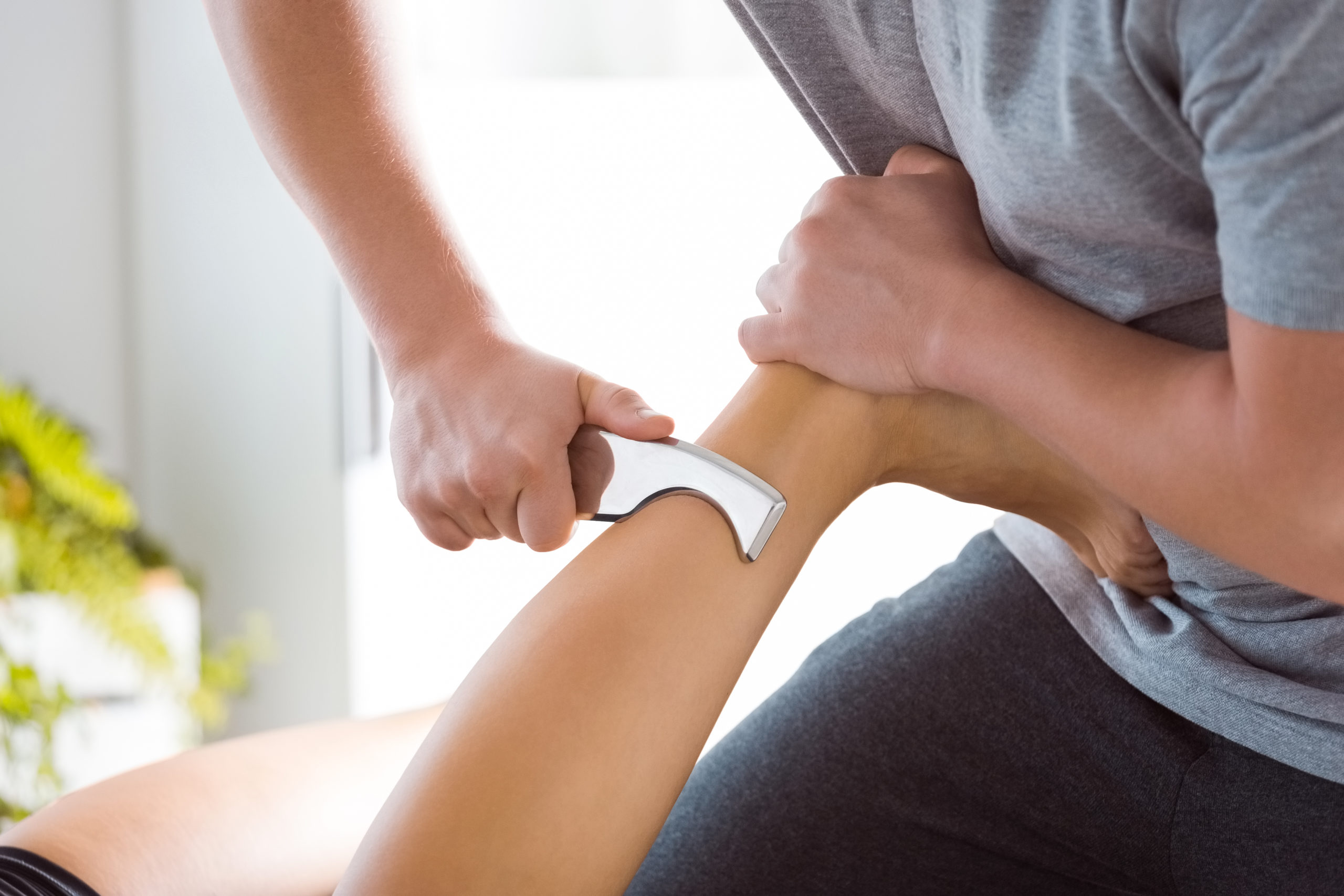
IASTM is a specialized manual therapy technique that uses ergonomically designed tools to detect and treat soft tissue dysfunction. This course is designed to equip physiotherapists, chiropractors, osteopaths, sports rehab professionals, and manual therapists with hands-on skills in applying IASTM for effective patient outcomes.
Participants will learn how to effectively use stainless steel tools to break down fascial restrictions, improve mobility, and reduce pain across various musculoskeletal conditions.
Course Objectives✅ Understand the science and principles behind Instrument Assisted Soft Tissue Mobilization
✅ Learn different techniques using tools for assessment and treatment
✅ Identify fascial adhesions, scar tissues, and chronic muscle tightness
✅ Apply IASTM to enhance muscle function and mobility
✅ Reduce musculoskeletal pain and improve soft tissue healing
✅ Gain hands-on training and learn post-IASTM corrective strategies
This course has been designed to be systematic, evidence-based, and most importantly, to have direct clinical application that can be implemented immediately with patients. The course content complements one- or two-day live seminars on IASTM conducted by other Continuing Education Unit (CEU) providers.
For the academic years 2021–2022, we also intend to offer both one-day and two-day live IASTM seminar courses that will complement this home study programme. These sessions will enable participants to acquire and apply new knowledge on IASTM, enhance their assessment efficiency, and practise the techniques learned through the home study module.
Chapter 1: Foundation and the Rationale Behind IASTM
Chapter 2: Research Evidence and Clinical Effectiveness of IASTM
Chapter 3: Principles and Benefits of IASTM
Chapter 4: Physiological and Neurophysiological Responses to IASTM
Chapter 5: Types of Tools Used in IASTM
Chapter 6: Types of Strokes, Application Techniques, and Usage
Chapter 7: Indications, Precautions, and Contraindications for IASTM
Chapter 8: Fascia, Fascial Chains, and Fascial Slings
Chapter 9: Trigger Points and Adaptive Shortening
Chapter 10: Clinical Patterns of Movement Dysfunctions and Application of IASTM
Chapter 11: IASTM Techniques for the Upper Body — Cervical, Shoulder, Thoracic, and Elbow Regions
Chapter 12: IASTM Techniques for the Lower Body — Lumbar, Hip, Knee, and Ankle Regions
-
Comprehensive Course Manual:
The course includes a 150-page CEU-approved manual containing over 240 references, organised into twelve distinct chapters. It features more than 100 illustrations and graphics to support visual learning. The manual is delivered electronically by PTCS, with an option to receive a printed copy for an additional fee. -
Video Access:
Students will have access to 20 instructional videos that correspond to and reinforce each of the twelve chapters of the IASTM Home Study Course. To obtain access, participants must contact PTCS directly. -
Examination and Certification:
All examination fees are included in the course cost. To earn CEUs, each student must log in to our secure website to verify their identity with PTCS. Once verified, students are required to complete an online examination consisting of 25 multiple-choice questions. The exam may be taken at any time at the student’s convenience. Upon achieving a minimum score of 75%, the CEU certificate will be issued directly to the student by PTCS.
Instrument Assisted Soft Tissue Manipulation (IASTM) offers several therapeutic benefits, both for patients and clinicians. Its key advantages include:
-
Significant increase in range of motion (ROM)
-
Reduction in peripheral resistance, leading to an increase in local tissue temperature
-
Reduction in pain levels
-
Improvement in microcirculation
-
Enhanced tissue perfusion and alteration of microvascular morphology in the region of healing ligaments, particularly around the knee
-
Acceleration of tissue and ligament healing
-
Reduction in compression forces on the clinician’s hands, especially at the distal interphalangeal (DIP) joints, thereby minimising practitioner strain.
Course Approved for 16 CEUs
-
Interpret and list two sources related to the foundation and origin of Instrument Assisted Soft Tissue Manipulation (IASTM), along with the latest clinical research in the field.
-
Apply the fanning stroke technique for a patient presenting with active or latent trigger points in the upper trapezius muscle.
-
Independently justify the selection of an appropriate IASTM tool and develop a treatment plan for a given clinical condition.
-
Accurately compare the mechanical and physiological responses of IASTM when provided with a case study.
-
Explain three key differences between fascial restriction and muscle tightness.
-
Identify two indications and two contraindications of IASTM for an instructor-specified clinical condition.
-
Explain the rationale behind IASTM by comparing mechanical and neurological responses, using the most recent research evidence.
-
Demonstrate understanding of fascia, identify common fascial restrictions using IASTM techniques, and relate these to current research findings.
-
Based on an instructor-specified example and evaluation findings, accurately choose the appropriate IASTM technique to manage the condition.
-
Compare the clinical patterns of spinal stenosis, spondylosis, and lumbar radiculopathy in terms of symptom behaviour, clinical findings, and common muscular imbalances.
-
Differentiate between active and latent trigger points in patients diagnosed with fibromyalgia.
-
Justify the choice of IASTM tool based on the presence of trigger points identified during a therapy evaluation.
-
Design a plan of care incorporating IASTM for a patient diagnosed with a rotator cuff repair, subacromial decompression, shoulder impingement, or similar conditions.
Home Study
Course Creator: Chris Gellert, PT, MMusc & Sportsphysio, MPT, CSCS, C-IASTM
Chris Gellert is a practising physical therapist with over 18 years of clinical experience. Uniquely, he is also a certified personal trainer with more than 20 years of experience in the fitness industry. Over the past 15 years, Chris has conducted numerous seminars, workshops, and conference sessions for personal trainers, massage therapists, physical therapist assistants, and physical therapists across various platforms.
He has developed over 15 home study courses, five live seminars, and several webinars, focusing on the foundational sciences, functional assessments, and applied sciences of human movement.
Chris’s primary area of expertise lies in orthopaedics, particularly spinal rehabilitation. He has an unwavering passion for educating allied health and fitness professionals in the fields of human movement, post-rehabilitation training, and related disciplines.
£50 / ₹5,700
+91 8881388817 , info@ihfa.uk
Course includes:
-
 Level
Level
-
Intermediate
-
 Duration
20h
Duration
20h
-
 Lessons
0
Lessons
0
-
 Quizzes
0
Quizzes
0
-
 Certifications
Yes
Certifications
Yes
-
 Language